XpatAthens

XpatAthens

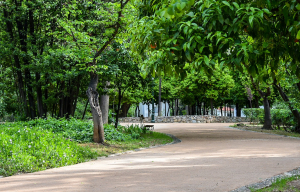
The National Garden, a green oasis in the heart of the city, one of the most beautiful landmarks of Athens, regains its lost glory. As part of a strategic plan, which includes the complete refurbishment of the historic garden, the Municipality of Athens delivers the first complete section on the northern side of the garden, between the Amalia and the Vasilissis Sofias Avenues.

From now on, residents and visitors of the city can wander the upgraded areas of the garden, sit on the benches, read a book under the trees, exercise, and play with their kids.

With respect to the area’s historical importance, which dates 186 years back, the Municipality proceeded with the reconstruction of the garden’s paths, the replacement of the old water supply system with a new advanced one, and the upgrade of the lighting system network. The garden’s distinctive lampposts were preserved and replaced where necessary. The benches were also upgraded but maintain their historic character and are totally aligned with the natural environment.

In the coming weeks, modern lights, as well as a signage system, will be installed.

Regarding the garden's flora, a team of experts was invited to take care of the rare trees, some of which are over 170 years old.

At the same time, emphasis was placed on the addition of new trees and plants that will enhance the biodiversity of the National Garden and help Athens become a green city. A total of 11,155 trees, shrubs, perennial herbaceous, seasonal, and climbing plants were planted.

Works are carried out in phases, so the garden remains open to the public.

The project also includes the restoration of historic buildings, the maintenance of historic marble and stone elements, the reconstruction of the playground and the pedestrian walkways, the fence’s restoration, the repair of the garden’s wooden bridge, and the construction of a new metal fence in the zoo.

Imagine waking up in ancient Athens, one of the most prominent city-states in ancient Greece. Your day would vary depending on your social status, gender, and occupation.

Here's a detailed look at how different individuals might spend their day.

Morning: The Start of the Day

Men:
  • Rise with the Sun: Men typically rose at dawn. They would wash up quickly, often using cold water, as hot water was a luxury.
  • Breakfast: A simple breakfast, known as "akratisma," consisted of barley bread dipped in wine, sometimes accompanied by figs or olives.
  • Work & Public Affairs: For many men, the morning was a time for work. Farmers would head to their fields to tend to crops like olives, grapes, and grains. Craftsmen and artisans would open their workshops to work on pottery, textiles, or metal goods. Merchants might head to the agora, the bustling marketplace, to trade goods.
  • Politics and Philosophy: In cities like Athens, men often engaged in political discussions or attended meetings at the assembly. Philosophers and students might gather at the gymnasium or in private homes to discuss ideas and theories.

Women:

  • Household Chores: Women usually woke up early to manage household tasks. They were responsible for preparing meals, spinning and weaving cloth, and caring for children.
  • Breakfast: Similar to men, women also had a simple breakfast. They might eat with their children before the day’s chores began.
  • Domestic Work: Women spent much of the morning engaged in domestic duties, which included cleaning, fetching water, and making clothes.

Midday: The Heart of Daily Activities

Men:

  • Continued Work: Farmers would continue their labor in the fields, while artisans and craftsmen worked on their trades. The marketplace remained lively with merchants and buyers haggling over goods.
  • Meals: The midday meal, known as "ariston," was light, often consisting of bread, cheese, fruits, and perhaps some fish.
  • Leisure and Socializing: Men might take a break to socialize at the agora, discussing politics, philosophy, or daily news. Public baths were also a popular place to relax and converse
Women:
  • Household Management: Women continued with their household responsibilities. Wealthier women might have slaves to assist with chores, allowing them more time for weaving or managing household finances.
  • Midday Meal: Women and children would have their ariston together, similar to what the men ate.
  • Religious Duties: Women often participated in religious rituals and household worship, paying homage to gods and goddesses to ensure the family’s well-being.

Afternoon: Winding Down the Day

Men:

  • Return Home: Farmers and workers would return home as the sun began to set. Before dinner, men might visit the public baths to cleanse and relax.
  • Symposia and Social Gatherings: Wealthier men might attend symposia, which were social gatherings involving drinking, music, and philosophical discussions. These events were important for networking and entertainment.
  • Dinner: The main meal of the day, "deipnon," was consumed in the evening. It included more substantial fare such as fish, legumes, vegetables, and occasionally meat. Wine, diluted with water, was a common accompaniment.

Women:

  • Evening Chores: As the day wound down, women would finish any remaining chores, prepare for the evening meal, and ensure the household was in order.
  • Dinner: Women and children would have their deipnon separately from the men. This meal was more substantial than the midday meal, featuring stews, bread, vegetables, and fruits.
  • Evening Activities: After dinner, women might engage in spinning, weaving, or other crafts. They also participated in evening prayers and rituals.
Night: Rest and Reflection

  • Family Time: After dinner, families might spend some time together before bed. Stories and myths were shared, often teaching moral lessons or entertaining the children.
  • Rest: With the day's work done, the household would retire for the night, ready to begin the routine anew with the dawn.
Daily life in ancient Athens was structured around work, family, and community, with a strong emphasis on social roles and responsibilities. Men and women had distinct daily routines, reflecting their different roles in society. Despite the differences from today's world, the rhythm of work, meals, socializing, and rest created a familiar pattern of life, highlighting both the uniqueness and the timeless aspects of human daily existence.


If you’re an expat with a bit of freedom in your travel calendar, you’ve got a golden ticket for shoulder season cruises—think the Mediterranean, Greece, and honestly, plenty of other places. Spring and early autumn cruises bring you smaller crowds, pleasant weather, and prices that don’t make your wallet cry, unlike the peak summer rush. The ports and big-name sights are way less chaotic, so you can actually breathe—and enjoy yourself—both on the ship and ashore.

There’s a lot to love about this time of year, from the sunlit Greek islands to those postcard-perfect Mediterranean towns.

Why Shoulder Season Cruises Are Perfect for Expats

There’s just something about shoulder season cruises in the Mediterranean that works for expats who don’t have to stick to school holidays or the typical summer rush. You get to wander through famous spots with fewer tourists, enjoy weather that’s actually comfortable, and nab some real cultural experiences—all while making the most of your travel flexibility and snagging some decent savings.

Fewer Crowds and a More Relaxed Experience

Traveling in the shoulder season—usually spring or early autumn—means you’re dodging those packed ships and jammed streets. Embarkation lines? Shorter. Disembarkation? Much less hassle. You can actually hear yourself think at the big sights.

Greek islands and those coastal cities take on a whole new vibe outside the high season. There’s time to linger at landmarks, and you’re not elbowing your way through selfie sticks. Museums and restaurants are easier to get into, and the staff aren’t run off their feet. It’s a slower pace, and honestly, it’s just nicer—lets you soak in each stop without feeling like you’re on a conveyor belt.

Enjoying Pleasant Weather and Local Culture

Spring and early autumn in the Mediterranean? Pretty much perfect. Warm, but not the kind of heat that makes you question your life choices. You can actually enjoy those walking tours or beach days without melting.

This is also when you’ll stumble into harvest festivals, concerts, or little local happenings that don’t make it onto the tourist brochures. Locals are back in their routines, and you get a glimpse of real daily life—cities start to feel like themselves again. If you’re after that sweet spot of sunshine, chill crowds, and a bit of immersion, Greek island cruises during shoulder season are a solid bet.

Travel Flexibility: Leveraging Your Expat Lifestyle

Being an expat means you can play around with your schedule. You’re not locked into school breaks or the usual holiday chaos, so you can pounce on last-minute offers or those random shoulder season promos cruise lines throw out to fill up cabins.

It’s easier to work around your local commitments, maybe sneak away for a week without causing a stir at work. You get first dibs on better cabins and more options for where and when you go. So, you can really stretch your travel budget—and probably have more fun, too.

How to Find the Best Shoulder Season Cruise Deals

Shoulder season opens up a bunch of chances for expats to see quieter places and save some cash. With a little planning, you can catch mild weather, interesting itineraries, and deals that are actually worth it—across the Med and beyond.

Top Mediterranean Destinations in Spring and Autumn

Think April to early June or September through early November—these are the golden months. Greece is a no-brainer: the islands are gorgeous, and you don’t have to fight your way through Santorini or Mykonos. It’s almost weird how peaceful it feels.

Italy’s Amalfi Coast and Spain’s Balearic Islands are also way more enjoyable without the summer mobs. The weather’s still great for exploring, so you’re not stuck hiding in the shade.
Turkey’s coastline—Bodrum, Kusadasi—has this cool, relaxed energy, and you won’t be jostling with crowds. And Croatia? Dubrovnik and Split are honestly best outside the sweaty, packed summer peak.

Insider Tips for Booking at the Right Time

If you want the best deals, you’ll want to book either way in advance or roll the dice on a last-minute offer. Grabbing a spot six to twelve months early can get you good cabins and those elusive early-bird prices, especially for those spring and autumn sailings everyone’s after.

Or, if you’re flexible, keep an eye out for last-minute bargains—sometimes cruise lines drop prices just to fill a few empty rooms. “Wave season” (January to March) is another hot tip: lots of discounts and perks like onboard credit. For more tricks, these insider tips for finding the best cruise deals are worth a read.

Sign up for mailing lists or alerts from agencies that know their Mediterranean stuff. You’ll be the first to know about flash sales, exclusive deals, or those oddball repositioning cruises that sometimes turn out to be the best adventures.

Maximizing Savings & Value as an Expat Traveler

Living abroad? You’ve got a bit of an edge—cruises leaving from regional ports like Athens, Barcelona, or Rome can seriously cut down on airfare and travel hassles. I mean, who wants to spend half their trip just getting to the ship? If you can swing a midweek departure, that’s where the sneaky good deals usually hide.

Being flexible with your dates and poking around at different itineraries—yeah, it takes a little patience, but it’s worth it. I’ve noticed spring and autumn are when those multi-country cruises really drop in price. Not a bad time to see more for less.

Honestly, don’t underestimate the power of local expat groups and travel forums. People love sharing their latest finds and promo codes, and sometimes you’ll stumble across tips you’d never find on your own. If you want to dig deeper, there’s always Travel + Leisure’s guide on how to find the best cruise deals—it’s pretty thorough.

Thursday, 05 February 2015 13:15

My Week in Athens… Aug 30

I'm enjoying this break from the heat! Sure, blue skies and sunshine are fantastic (and, let’s be honest, part of what makes Greece beautiful). But the 40+ heat of the past few weeks has left me lethargic and ‘slow’…

So on we go to warm breezes and cool evenings – and still that wonderful sun.

This week has been a quiet one. Feels like the ‘seasonal transition’ has started – summer is on its way out, and autumn is on its way in. I love this. It’s an important part of life, and helps us to shift gears and move forward in many ways. What’s often unclear is ‘what’s next’ – and I mean that both personally and for the country in general. I remember that ‘back to school’ feeling of childhood – when we would put on our new pair of pants and head off for the great unknown of a new school year.

I hope that autumn brings positive movement, or at least a feeling that things are moving in the right general direction!

Maybe that new pair of pants is a good idea. Or maybe what we need right now is just a good night out ;)

Until next week,

Jack

In this weekly space, keep up with ‘Jack’ as he navigates daily life in Athens… Anecdotes, stories, hits & misses, the good, the bad and, well, the rest…

Monday, 16 February 2015 11:06

La Barraca: Barcelona in Glyfada!

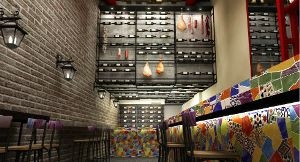
And yet , even Zisimopoulou street changes... The erstwhile street with the ostentatious lifestyle and giant cafés with the lounge aesthetic, which turned out to be impersonal, just acquired a new little spot with lots of personality. And indeed very Barcelona-like! Because if you have visited the city of Antoni Gaudi, you will definitely remember those elongated bars that feature colorful and vivid tiles as well as the delicious tapas.

La Barraca is something like that. You can have your afternoon wine, while tasting beef carpaccio or smoked eel with apple chutney, celery, ginger and roasted hazelnut.

And if you're very hungry, there is a choice of five main dishes of Mediterranean cuisine. All this, on the bar or the tall tables. And as the night comes, you can be swept away in swing and soulful music or even dance to deep house tunes on Fridays and Saturdays.

La Barraca, Zisimopoulou 9 Glyfada , 6970077050

By Christos Karras; translated by Eleni Georgiou

athinorama.gr


Do you have a recommendation or recipe to share? Send it to us at ideas@xpatathens.com!

Wednesday, 18 February 2015 15:59

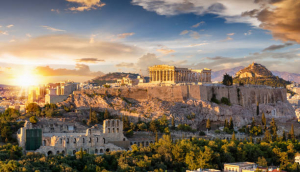
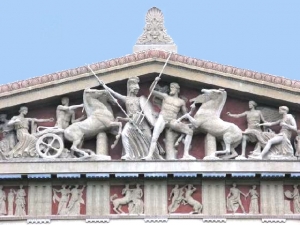
White Sculptures Of Parthenon Were Colourful

In a new analysis, scientists have confirmed that the sculptures on the triangular gables of the Parthenon temple in Athens, which are pristine white, were originally brightly painted. According to a report in Nature News, conservation scientists at the British Museum in London used a non-invasive technique to reveal invisible traces of an ancient pigment known as Egyptian blue.

The team says that this is the first definitive evidence that the two-metre-high sculptures were not pristine white, as they appear today, but were precisely painted, as most sculptures from antiquity once were.

The pigment, which was widely used until 800 AD, was identified on sculptures that formed parts of the decorated east and west ends of the Parthenon temple.

It has been known for more than two centuries that the Ancient Greeks and Romans painted their statues.

That paint has almost completely disappeared over time, although tiny flecks can be found on most statues on close inspection.

Unusually, no trace of paint has ever been found on the Parthenon sculptures, despite thorough analysis, including a full investigation by the renowned British physicist Michael Faraday in the 1830s.

Giovanni Verri, a physicist in the museum's department of conservation and scientific research, developed a technique to exploit the fact that Egyptian blue emits near-infrared radiation when excited by visible light.

His portable detector comprises a light-emitting diode that beams red light onto the surface being examined, and a camera that can detect the infrared light emitted by the pigment particles.

"The distribution of the pigment is also a key issue in proving that the sculptures were painted," said Verri.

For example, the pigment found on the winged messenger goddess Iris traces just the belt restraining her billowing tunic, and nowhere else on the figure.

Greek conservators have recently observed greenish flecks on remnants of the Parthenon frieze that are in Athens, but have not reported analyses of them.

"We informed our Greek colleagues of what we found and they responded warmly, saying they are interested to examine these flecks themselves," said Verri.

"I always believed the frieze must have been painted," said Ian Jenkins, senior curator in the British Museum's Department of Greece and Rome. "This new method leaves no room for doubt," he added.

According to Verri, these frieze flecks could also be Egyptian blue, and is keen to examine them with his portable detector.

Friday, 20 February 2015 20:16

Greek Beetroot And Yoghurt Salad

This salad is one of my favorites, a change from eating plain boiled beetroot, seasoned with salt, vinegar and olive oil, the way we usually eat it in Greece. It can serve nicely in a buffet dinner or on your everyday dinner table. Seasoning and quantities depend on individual tastes.

Ingredients
Serves: 8 

500g beetroots
250g Greek yoghurt
2 tablespoons red wine vinegar
2 cloves garlic, crushed
salt and pepper
2 teaspoons virgin olive oil
1 heaped tablespoon coarsely chopped walnuts
half walnuts for garnishing

Method
Prep:5min  ›  Cook:30min  ›  Extra time:1hr chilling  ›  Ready in:1hr35min 

Scrub and wash beetroots thouroughly under running water.

Put into pan with enough water to cover them and boil in medium heat for 30 minutes or until they are tender.

Rinse under cold water, peel (now the skin comes out easily with just a little squeeze of your fingers). Cut into slices, cubes, whatever you like.

Prepare yoghurt: in a bowl blend yoghurt, vinegar, garlic, salt and pepper and half the olive oil. Add the beetroots and the chopped walnuts in the yoghurt mix, reserving a few pieces of beetroot for garnishing.

Place salad in bowl. Decorate it with pieces of beetroot and walnut halves and drizzle with the rest of the virgin olive oil.

Tip: You can omit the yoghurt and walnuts and serve beetroots with salt, vinegar, olive oil and finely chopped garlic.

By Maroula

allrecipes.co.uk

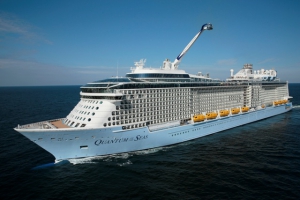
Shipping Minister Thodoris Dritsas, Alternate Tourism Minister Elena Kountoura and the US Ambassador to Greece David Pearce were at the port of Piraeus on Monday morning, 18th May to welcome the Quantum of the Seas, one of the largest cruisers to dock at the Greek port.

Launched in 2014, the 1 billion dollar Royal Caribbean dream ship has 2,090 staterooms plus 28 for solo travellers, 16 guest decks served by 16 lifts, 18 restaurants ranging from Asian and Italian to pub-style and steakhouse options, and a total 1,500 crew members from 68 countries serving its passengers.

But what makes the Quantum of the Seas special is the latest in technology as well as the limitless recreational activities on board including bumper cars, simulated skydiving and circus trapeze classes, a rock-climbing wall, roller-skating, basketball, a shuffleboard court, the North Star observation dock that swings daring passengers some 92 meters above the sea so they can catch a bird’s-eye view and robots mixing drinks at the bionic bar.

On a more human level, super chefs Jamie Oliver, Michael Schwartz and Devin Alexander have drawn up innovative meals for passengers, who book their meals and activities via apps.

To read more, please visit Greek Travel Pages.
Wednesday, 06 March 2024 07:00

Carnival Traditions In Greece

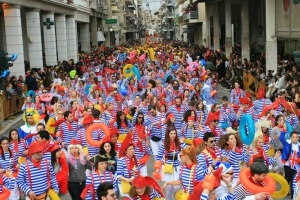
Imagine one of the biggest street parties you've ever seen. It's a time when people of all ages can take a break from their everyday lives, dress up in full costume, and dance in the street! This is carnival in Greece!


Carnivals Around Greece

The Patras Carnival is the largest event of its kind in Greece and one of the biggest in Europe. Giant decorated cars, carts, coaches, and colorful paper-mâché figures fill the city streets for a full weekend of street parades and parties. A key character is the Carnival King, presented in all his splendor. The carnival also has its queen, who is actually a beautiful young lady on a floral or artistic float. There is also a night parade, called “nyhteriní podaráti" (which means night walk), which takes place on Saturday night before Sunday’s extravagant parade. Thousands of carnival participants are organized into groups and dance holding torches in the dimly lit streets of the city. The only float allowed to participate in this parade is the King’s.

If you find yourself in central Greece during carnival season, you should definitely experience the Tyrnavos Carnival; Tyrnavos is known as a “rebellious” little town in the region of Thessaly, just outside the city of Larissa. Put on your costume and pick a team that you'd like to be part of (the “Next Top Model,"  “Surgeons and Sexy Nurses,"  “Tri-Colour Macaroni, etc.), and get ready to party until your heart’s content!

Head to northeastern Greece for the Xanthi Carnival to experience a spectacular carnival that is organized in association with over 40 cultural groups of the region. Each association sets up its stalls in the streets of the city to wine and dine the guests with plenty of local wine and delicacies. Be sure to look out for the custom of “To kápsimo tou Tzárou” (the burning of Tzaros) as well as for the highlight of carnival celebrations, the Great Carnival Parade on the evening of the final day of the carnival. Floats with thousands of masked revelers fill the streets with music and colors to accompany the Carnival King.

If you enjoy carnival with a Venetian masquerade twist, then head to Crete for the Rethymno Carnival. For almost a whole month, the city is host to a series of fun-filled celebrations, bringing together locals and visitors alike who want to participate in carnivals just simply because they love to live in the moment! The Rethymno Carnival Parade is a spectacular production of pictures and sounds with a strong Venetian influence evident in the costumes, the carnival floats, and the overall spirit of the carnival celebration.


Friday, 01 July 2016 09:43

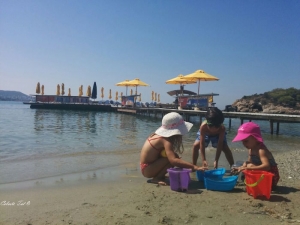
Family Friendly Beaches In Athens

Celeste, from Family Goes Out, shares her favourite family-friendly beaches in Athens!

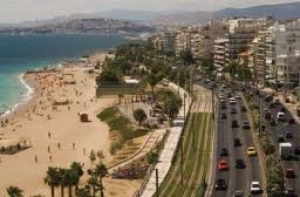
There are indeed a number of family friendly beaches along the southern and north eastern side of the Attica peninsula. To find a clean sea and a sandy beach with shallow water, it is best to pick a beach starting from Vouliagmeni-Kavouri. I personally prefer the beaches starting from Astir Vouliagmeni stretching to Cape Sounio. You can choose between free public beaches or a beach with an entrance fee. On many of the free public beaches are beach bars and the option of renting chairs and umbrellas. There are paid beaches run by the Green Tourist Organization and several first class beach clubs. The Tourist organization beaches offer some facilities such as changing cabins and bathrooms.

Astir Beach in Vouliagmeni

A beautiful first class beach club with all the facilities needed for a comfortable day at the beach. The sea here is calm and shallow. What I like here: nice decor, trendy people, a play area for the children, a large grass play field, clean facilities, watersports and family restaurants.

Grand Beach Lagonissi in Lagonissi

Not as asthetic as Astir Beach club but definitely as comfortable as far as fascilities. Very family orientated and in the member area there is also a swimming pool. I love the fact that towels are provided and I do not have to carry them from home. For members there is an alarm or service button at the sunbeds and there is a baby area inside providing soft play, a place to rest and feed your child.

Kalokairaki beach in Marathon

My favorite low budget beach on the other site of the Attica peninsula is the beach in front of the Kalokairaki canteen next to hotel Golden Coast in Marathon. The beach is not well known and mostly used by the locals. It is not a beach club but a sandy beach with a simple canteen and large play area. Yet, the people running this beach and the basic facilities that they offer make it an ideal family beach.

To read this article in full, please visit: Family Goes Out
Page 66 of 452